
Alan Kafka – The Mystery of Earthquakes in the Eastern United States
THE CLASSROOM WILL BE OPEN FOR THIS EVENT
Join us in the WAS Classroom for this lecture with Professor Alan Kafka who will join us in person. This event will be live-streamed on YouTube and as a webinar on Zoom, but we’d love to see you in the classroom at the Westport Observatory. As always, the talk will be posted to the Westport Astronomical Society’s YouTube channel afterwards.
The Mystery of Earthquakes in the Eastern United States
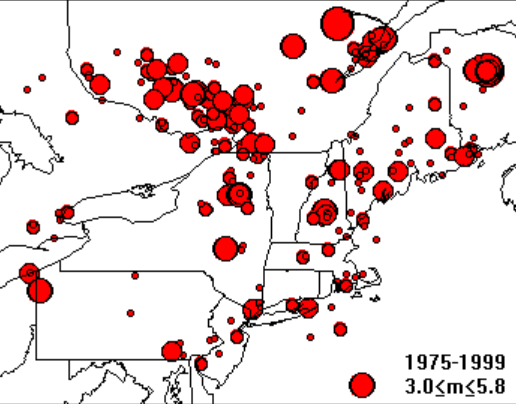
When people think of earthquakes, they probably think of a lot of places other than the Eastern United States (EUS), such as California and Japan. But (long ago), when I was a graduate student studying earthquakes in the Caribbean plate region, I discovered that earthquakes actually do occur in the EUS, and in fact they occur all around my hometown of New York City. Since then, I have been obsessed with the enigma of why earthquakes occur in the EUS, and in the New York City area in particular, deep within the interior of the North American plate. The EUS has had an intermediate level of seismic activity throughout its recorded history. It is, of course, not as seismically active as some parts of the Western US, or other parts of the “Ring of Fire” around the Pacific Ocean. Nonetheless, the EUS has had its share of significant historic earthquakes, such as: a magnitude ~5.9 earthquake off the coast of Cape Ann, MA in 1755; two magnitude ~5.5 earthquakes near Ossipee, NH in 1940; and a magnitude ~5.3 earthquake near New York City in 1884.
Unlike the situation near plate boundaries, such as along the San Andreas fault zone, the pattern of the seismicity in the EUS does not show any clear correlation of activity with geologically mapped faults. Thus, the cause of the earthquakes in this region remains an enigma and a fascinating mystery that I will explore in this lecture. I will also present how my studies of EUS earthquakes led to my development of what I call “Cellular Seismology”, a method of investigating the extent to which the past locations of earthquakes delineate zones where future earthquakes are likely to occur.
****
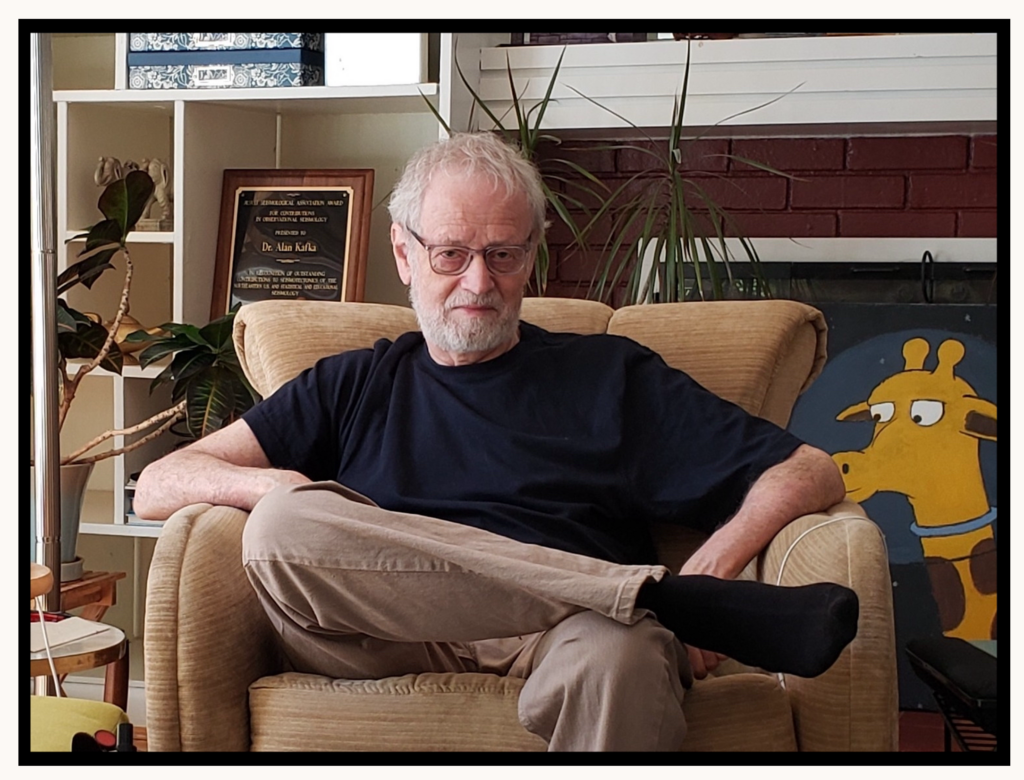
Alan Kafka’s research and teaching integrates geophysics, earthquake science, applied mathematics, environmental systems, and community science for the greater good. He studies earthquakes in many regions of planet Earth and has long been obsessed with the enigma of why earthquakes occur in the Eastern US, deep within the interior of the North American plate. This research led to his development of “Cellular Seismology,” a method he uses to investigate the extent to which the past locations of earthquakes delineate zones where future earthquakes are likely to occur. Dr. Kafka is also active in the global community of seismologists maintaining networks of seismographs for monitoring earthquakes and other seismic events around the world. After 42 years of teaching at Boston College and conducting research at BC’s Weston Observatory (a geophysical research and science education center), he retired from his faculty position at BC at the end of 2025 to pursue his lifelong dream of being an independent scientist.
Cal’s Corner is TBA
Date
- Apr 21 2026
Time
- 8:00 pm - 10:00 pm
Local Time
- Timezone: America/New_York
- Date: Apr 21 2026
- Time: 8:00 pm - 10:00 pm
Labels
- WAS Free In Person Science Lecture Series
Location

- 182 Bayberry Lane, Westport, CT 06880